
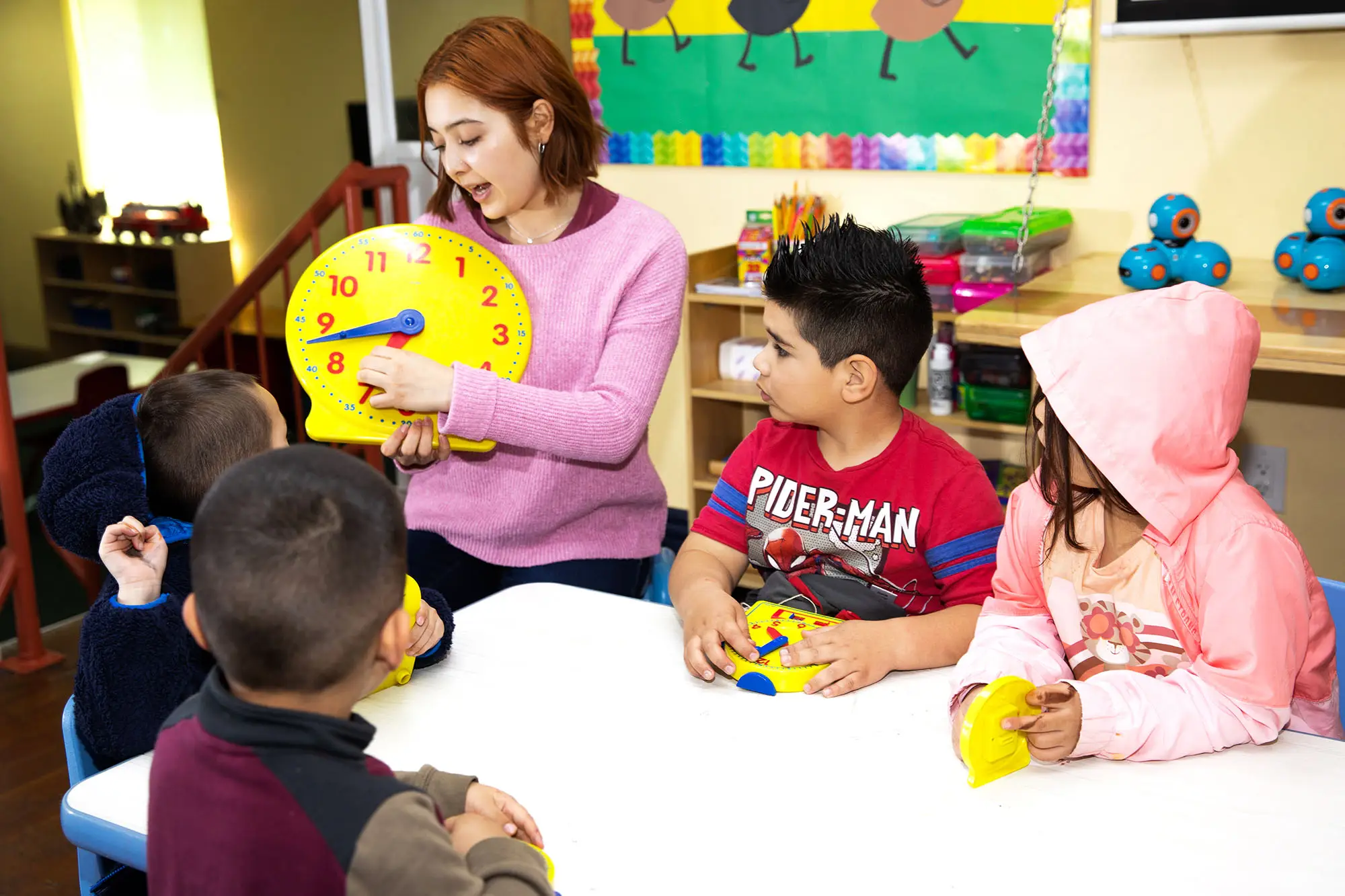
Every spring, Riverside parents of four- and five-year-olds run the same quiet audit: is my child actually ready for kindergarten, and what does "ready" even mean to the schools in Alvord and Riverside Unified? The honest answer from kindergarten teachers, surveyed year after year, surprises most families: the readiness that matters isn't academic head starts; it's self-regulation, independence, and language, with letters and numbers as helpful passengers rather than the engine. Here's the real checklist, as we use it with families at Sierra Preschool & After School in La Sierra.
Key takeaways
- •Kindergarten teachers rank self-regulation, following directions, and self-help skills above letter knowledge; every survey, every year.
- •The academic floor is modest: name recognition, some letters and sounds, counting with meaning to ten-plus, pencil-and-scissors basics.
- •Social readiness means functioning in a group: entering play, resolving small conflicts with words, and handling transitions without an escort.
- •California's age rule is simple (five by September 1 for kindergarten) and TK now catches the four-year-olds; readiness is about the child, not the cutoff.
- •The best readiness data comes from the people who watch your child in a group daily; the spring pre-K conference is where this decision belongs.
What do kindergarten teachers actually want on day one?
A child who can operate in a room of 24; the skills that make everything else teachable. The list, in the order teachers rank it: self-regulation; managing frustration without collapse, waiting turns, sitting with a group for fifteen-plus minutes, and shifting between activities on the room's schedule rather than their own; direction-following; holding two- and three-step instructions ("put your paper in the bin, get your jacket, line up") without a personal repeat; self-help; bathroom fully solo, jacket and lunchbox managed, belongings tracked, noses blown; communication; expressing needs to an adult who isn't a mind-reading parent, and being understood by strangers, and social entry; joining play with words, sharing space and materials, recovering from small conflicts. Notice what the list is: the exact daily curriculum of a good pre-K room. Notice what it isn't: reading, worksheets, or anything a flashcard teaches. A child strong on this list who knows twelve letters will out-kindergarten a child who knows all 26 and can't yet manage the bathroom line, and every kindergarten teacher in Riverside will tell you the same.
a day in our junior pre-K room
What's the academic readiness floor; honestly?
Lower than the worksheet industry wants you to believe, and specific. Arriving kindergartners are well-positioned with: their own name recognized in print and written (legibly-ish; a backwards letter or two is standard issue); a working bank of letters (many, not necessarily all 26) with some letter-sound connections, especially their name's; phonological ear skills (hearing rhyme, clapping syllables, catching first sounds) which predict reading acquisition better than letter counts do; counting with meaning; ten-plus objects with one-to-one touch-counting, knowing the last number answers "how many," and comparing more-versus-fewer; book behavior; right-side-up, front-to-back, and the understanding that print carries the words, and tool basics; a functional pencil grasp and scissors that cut a line. That's the floor, and children clear it through play-rich preschool days rather than drills: the sound games at circle, the name on the cubby, the snack-table counting, the easel. What's explicitly not required: reading (kindergarten's job), writing sentences, math facts, or sitting still for an hour. Families who spend the pre-K spring drilling flashcards are polishing the passenger while the engine (regulation and language) rides unattended.
How do the age rules and TK fit into the decision?
Simply, once stated. California kindergarten takes children who turn five by September 1 of the school year; transitional kindergarten (now expanded statewide) takes the four-year-olds who turn four by that same date, giving Riverside families a free public bridge year on the elementary campus. Both Alvord and Riverside Unified run spring registration windows for fall; get the dates from your district early, because popular sites involve placement logistics. The decision structure this creates for a family: an age-eligible child with a solid readiness profile goes to kindergarten on schedule; a four-year-old gets TK or a pre-K year (the venue question is schedule-shape; TK runs school-day hours on the district calendar, while full-day pre-K covers a working family's whole day year-round), and the borderline child (the young-five, the summer birthday, the socially-still-cooking kid) is exactly who the spring conference exists for. What the age rules don't do is answer the readiness question by themselves: eligibility is a birthday; readiness is a profile, and the profile is visible to the people who watch your child function in a group every day.
our before & after school program
How do we actually assess our own child, and close the gaps?
Ask the professionals, then spend the runway on the right things. The assessment: book the spring conference and ask the direct questions; where is my child on the regulation-independence-language stack relative to the room? What would kindergarten stretch first? Is there anything you'd want screened before fall? Teachers watching your child against a live reference group of age-mates hold better readiness data than any checklist you can run at home, and they'll answer with portfolio evidence rather than vibes. The gap-closing, if gaps exist: the summer before kindergarten responds best to targeted, playful work; more self-help ownership at home (bathroom, dressing, lunchbox practice with the actual lunchbox), more group experiences for the social-entry skills, the read-aloud and sound-game habits for the ear, and the earlier bedtime that funds all of it. What doesn't help: worksheet boot camps (they polish the wrong skill and tax the relationship) and anxiety (children absorb readiness worry as evidence school is dangerous). And the reframe that steadies most families: readiness is a range, not a bar; kindergarten teachers receive the whole spectrum every fall and are professionally built for it. The child who walks in curious, regulated-enough, and convinced school is a place they'll be good at is ready in the way that compounds. Everything on this page serves that sentence.
Frequently asked questions
My child has a summer birthday and will be a young five. Wait a year?
Not by default; the fade-out research on oldest-in-class advantages is robust, and TK plus the readiness profile give better answers than the birthday alone. Bring it to the spring conference with the teachers who know your child's actual profile.
Does Alvord or RUSD test children before kindergarten?
Districts run enrollment and may do informal readiness screening, not entrance exams; kindergarten takes age-eligible children as they come. Check your district's current registration process for specifics.
My child isn't potty trained at four and a half. Is kindergarten off the table?
It's the readiness item with a real deadline; kindergartens expect independent toileting. It's also very solvable in a season with a consistent two-team plan; start now and loop us in.
What does your pre-K year do about readiness specifically?
The whole year aims at the handoff (regulation, independence, sound-and-letter foundations, counting with meaning) tracked in portfolios and discussed honestly at conferences. Ask to see how we map to what local kindergartens screen for.
Wondering where your child stands? Ask the people who watch them in a group all day; book the conversation. Call (951) 689-9492, Sierra Preschool & After School in Riverside.